+ 6.
Уханна и красива е България…
Под величествената Стара планина е развиван занаят, даже официално производство, с което страната ни е известна по света. Роза Дамасцена – маслодайната роза.
Първата частна розоварна в България създава кътче от Рая, където можем да си припомним хубавото. Да открием спокойствие и да се насладим на символи. Етнографски комплекс „Дамасцена“ ни връща към тракийското и прабългарското ни начало, орфизма, плодородната ни земя, занаятите и отглеждането на рози.
Не, това място не е само за туристи. То ни дава друга гледна точка – към миналото, към настоящето и към планината. Комплекс „Дамасцена“ е място за усещания – да вдъхнеш, вкусиш, да се взреш в красиво и да продължиш напред с усмивка.
Странно или не, българите имаме явен проблем с дефиниране на „българското“ и неговото признаване. Това спъва много от светлите идеи. Имаме проблем със „случването“ им. Тук със сигурност немалко светли идеи са се изпълнили. И то с размах и любов.
Тракийският културен център е създаден по идея на собственика Стоян Стоянов, а артист е Красимир Колев. На много места е видим знакът на рода Дуло, който стои и в центъра на розетата от Плиска. Вграждането на образа й в настилката и то в значителен размер я прави акцент на основното фоайе. Столовете от масив също са с добавен знак IYI, което допълва единството на отделните елементи. Каменни каскади, декоративен водопад, езера и животни оформят биопарк. Това напомня и за българската природа, която трябва да обичаме и съхраняваме повече – чистота, грижа и искреност.
Реплики на част от Панагюрското златно съкровище, репродукция на Варненския халколитен некропол и най-старото обработено злато в света. Разходката в комплекса създава цялостен облик за България – на това, с което се очаква да се гордеем, но така често забравяме или неглижираме.
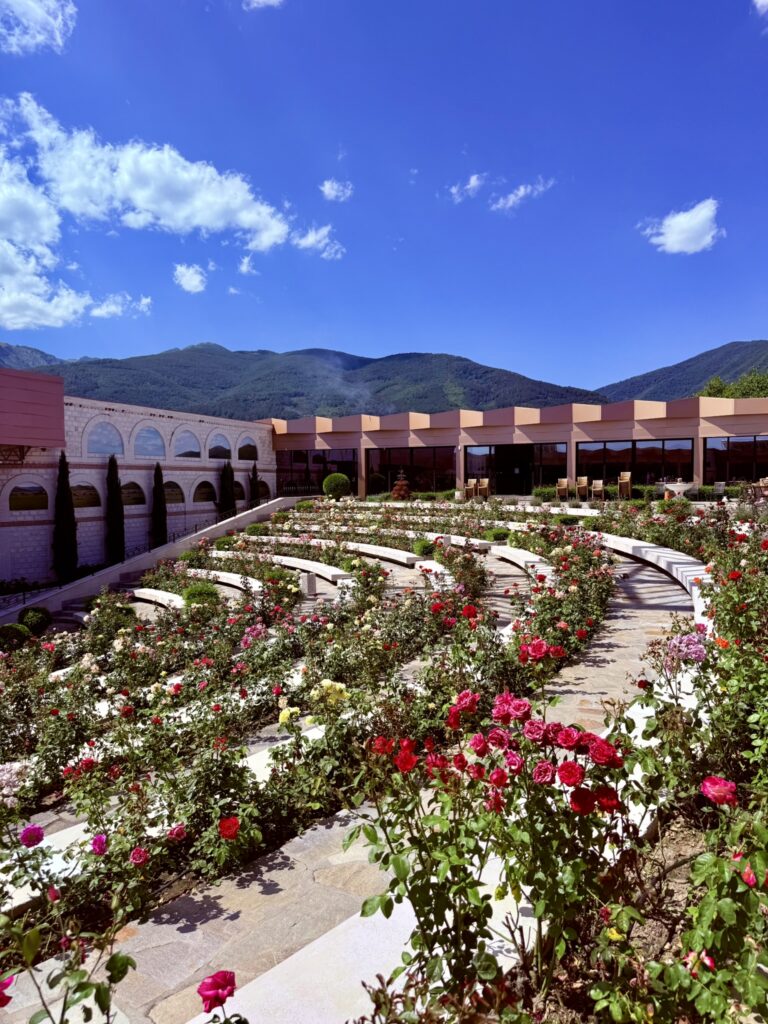
Амфитеатърът представлява редове за зрители и редове за рози. В този красив унисон и мащаб посетителите могат да се наслаждават на програмата на комплекса или просто да съзерцават и зареждат сетивата. Вплитането на рисуван цялостен пейзаж в сляпата аркада около сцената е прекрасен замисъл.
Когато пътуваме по света, търсим отличителното. Може би си заслужава да се вгледаме в собствената си страна като туристи и да оценим характерното – да го подкрепяме, развиваме и опазваме. Защото някой преди нас се е старал да го създаде. С любов и труд.
П.П.: Преди няколко години посетих розоварна в Мароко, в Атласките планини. В нея работиха само жени и пламенно ни разказваха за технологията. Докато не споменахме, че сме от България. Те разбраха, че нищо от това не ни е чуждо и навярно сме по-запознати с процеса и от самите тях. Ценете и познавайте българското. Има смисъл.
+ 6.
Bulgaria is enchanting and beautiful…
Nestled beneath the majestic Balkan Mountains, a craft – and later an established industry – was developed that has made our country famous around the world: the cultivation of Rosa Damascena and the production of rose oil.
Bulgaria’s first privately owned rose distillery has created a little piece of paradise where visitors can reconnect with the beauty of the past, find peace, and appreciate timeless symbols of our heritage. The Damascena Ethnographic Complex takes us back to our Thracian and Proto-Bulgarian roots, the traditions of Orphism, our fertile land, our craftsmanship, and the centuries-old cultivation of roses.
No, this is not a place meant only for tourists. It offers us a different perspective – on the past, on the present, and on the mountain itself. The Damascena Complex is a place of sensations: to breathe deeply, to taste, to immerse yourself in beauty, and to move forward with a smile.
Oddly enough, or perhaps not – Bulgarians often struggle to define what it truly means to be Bulgarian and to appreciate the value of our own heritage. This holds back many bright ideas and makes it difficult for them to become reality. Here, however, many such inspiring ideas have undoubtedly come to life – with vision, ambition, and love.
The Thracian Cultural Center was created on the initiative of its owner, Stoyan Stoyanov, while the artistic concept was designed by Krasimir Kolev. Throughout the complex, the symbol of the Dulo clan can be seen in many places. It also appears at the center of the famous Rosette of Pliska. Incorporated into the flooring on a grand scale, the rosette becomes the focal point of the main foyer. Even the solid wooden chairs bear the IYI symbol, reinforcing the harmony and unity of the architectural design. Stone cascades, an ornamental waterfall, ponds, and animals together form a biopark. It is also a reminder of Bulgaria’s natural beauty – a heritage we should cherish and protect with greater care, cleanliness, and sincerity.
Replicas of part of the Panagyurishte Gold Treasure, a reproduction of the Varna Necropolis – the world’s oldest worked gold, are among the highlights of the complex. A walk through its grounds creates a complete picture of Bulgaria – of the heritage we are expected to take pride in, yet so often forget or overlook.
The amphitheatre is composed of rows of seats interwoven with rows of roses. In this beautiful harmony and impressive setting, visitors can enjoy the complex’s cultural programme or simply pause to admire the surroundings and restore their senses. The decision to incorporate a panoramic painted landscape into the blind arcade surrounding the stage is a particularly inspired artistic touch.
When we travel the world, we seek out what makes each place unique. Perhaps it is worth looking at our own country through the eyes of a traveller and appreciating what makes it distinctive – to support it, nurture it, and preserve it. After all, someone before us devoted love, vision, and hard work to creating it.
P.S. A few years ago, I visited a rose distillery in the Atlas Mountains of Morocco. It was staffed entirely by women, who enthusiastically explained every step of the production process. That was until we mentioned that we were from Bulgaria. They immediately realized that none of it was unfamiliar to us—and that we were probably even more familiar with the craft than they were.
Know your Bulgarian heritage. Value it. It is worth preserving.